Wild Type Axolotl: The Original Colour Explained
The wild type is the colour axolotls wear in nature: a mottled olive-brown that hides them against the muddy canal beds of Lake Xochimilco. The standard colour morphs differ from it by a change in one or more pigment genes.
Quick answer
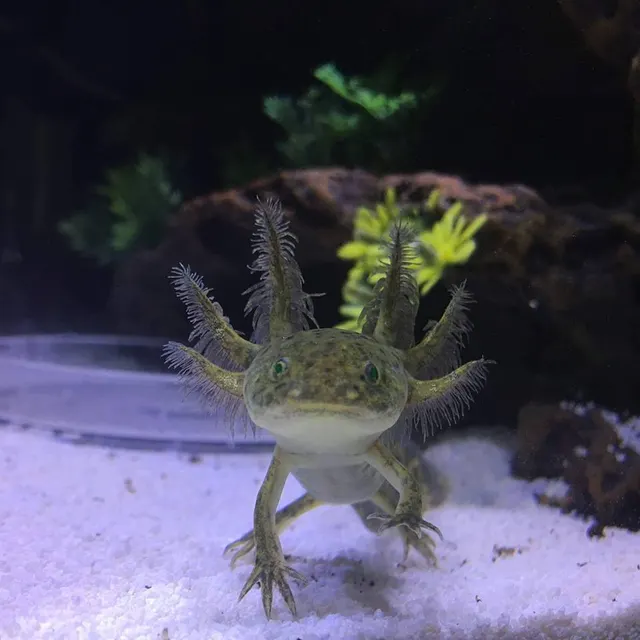
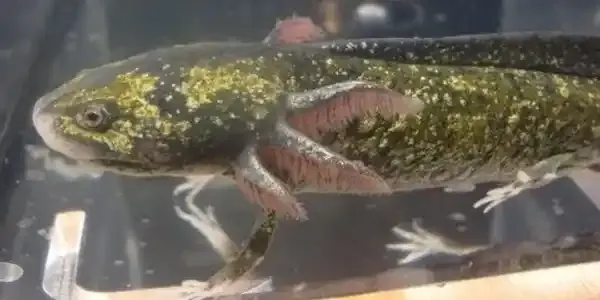
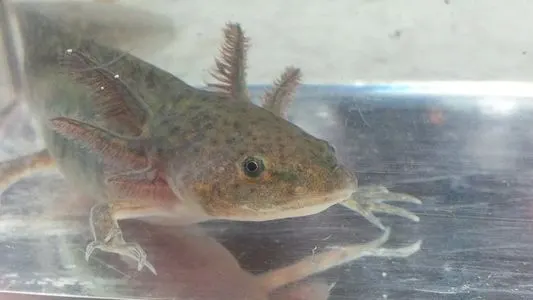
A wild type axolotl is dark olive, brown or grey-green with black spots and shiny gold flecks, and it has a metallic gold ring around each pupil. It carries working copies of all the main pigment genes, so it is the genetic starting point for every other morph.
- Olive-brown to near black, with gold flecks
- Gold ring around the pupil
- Has all three pigment cell types
- Can carry hidden genes for other morphs
What a wild type axolotl looks like
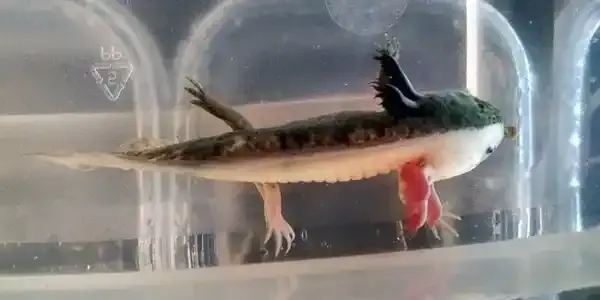
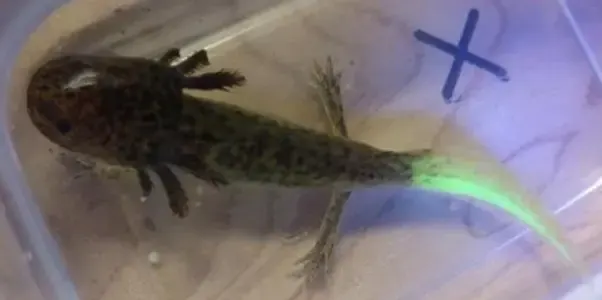
Wild types range from pale olive to almost black. The body is covered in darker spots and dusted with reflective gold or green specks, most obvious on the tail and along the sides. The gills are dark, often with purple or deep red filaments, and the belly is paler than the back. Individuals also shift shade with their surroundings: a wild type kept on dark sand usually looks darker than one kept in a pale tub.
Wild type genetics
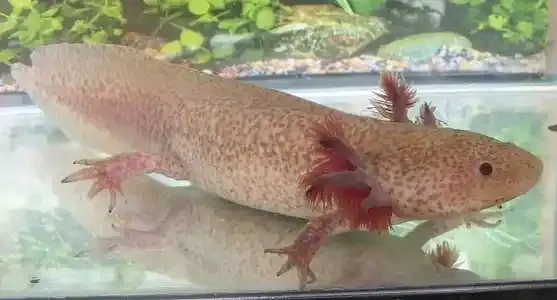
Axolotl colour comes from three kinds of pigment cell: melanophores (black-brown), xanthophores (yellow) and iridophores (reflective). A wild type has all three working. The genes behind the common morphs are recessive, so a wild type can carry one hidden copy of albino, leucistic, melanoid or axanthic without showing it. Breeders call these carriers “hets”. When two wild types both carry the same hidden gene, each baby has about a one in four chance of showing that morph. You can test pairings in our Morph Genetics Calculator.
How to tell a wild type from similar axolotls
The usual mix-up is with the melanoid. Look at the eye: a wild type has a shiny gold ring around the pupil, and a melanoid has none. Wild types also sparkle in good light because of their iridophores, while a melanoid looks flat and velvety.
Care and buying notes
Colour does not change care: every morph needs the same cool, clean, cycled water described in our Axolotl Care Sheet. Wild types are no hardier or weaker than the other morphs. Their dark colour makes pale problems such as fungus easy to spot.
Frequently Asked Questions
Are wild type axolotls taken from the wild?
No. Pet wild types are captive bred. The name describes the colour, not where the animal came from. Wild axolotls are critically endangered and protected.
Can two wild type axolotls have white babies?
Yes, if both parents carry a hidden copy of the leucistic gene. Each baby then has about a one in four chance of being leucistic.
Do wild type axolotls change colour?
They can lighten or darken somewhat with their surroundings and with age, but they do not change into a different morph.