Melanoid Axolotl: The Black Axolotl Explained
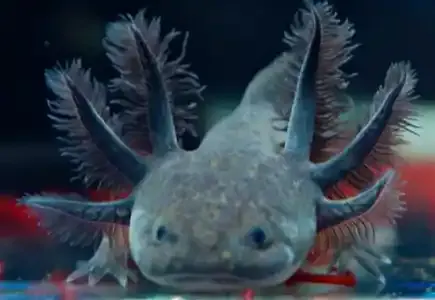
The melanoid is the black axolotl. Where a wild type is speckled and shiny, a melanoid is a flat, velvety black or charcoal from nose to tail.
Quick answer
A melanoid axolotl is black to dark grey with a matte finish, dark gills and plain black eyes. A recessive gene removes its reflective pigment cells, so it has no gold flecks and no shiny ring around the pupil.
- Matte black or dark grey
- No gold flecks, no gold eye ring
- One recessive gene (two copies needed)
- Young melanoids can look like dark wild types
What a melanoid axolotl looks like
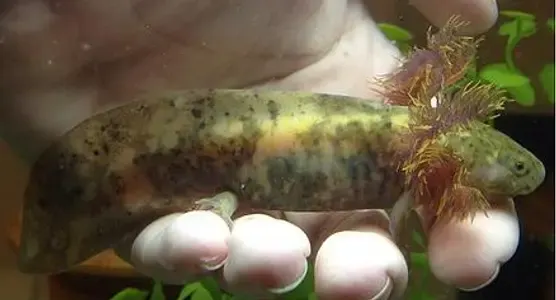
An adult melanoid is usually an even black, deep brown-black or slate grey, though some show faint mottling. The belly is often a lighter grey. The gills match the body, sometimes with a purple tint. Even in bright light there is no sparkle. Colour can lighten a little on pale surfaces, so a melanoid kept in a white tub may look grey.
Melanoid genetics
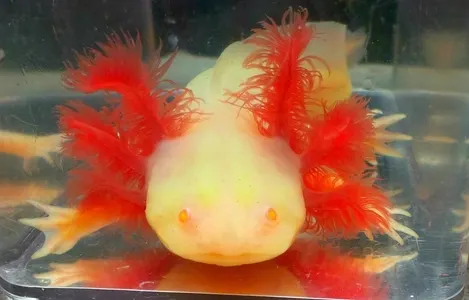
The melanoid gene is recessive. Two copies remove the iridophores, the reflective cells, and reduce the yellow xanthophores, which leaves the dark melanophores to cover the body. Melanoid combines with other genes: a melanoid albino is a pale, matte animal with none of the shine of a golden albino. Two melanoids always produce melanoid babies. You can test pairings in our Morph Genetics Calculator.
How to tell a melanoid from similar axolotls
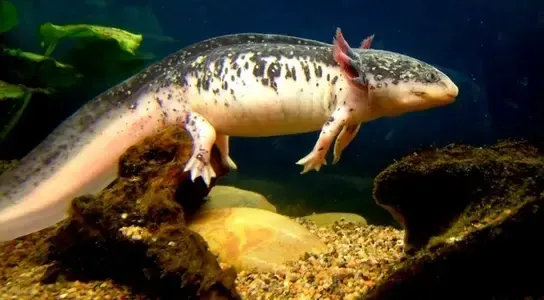
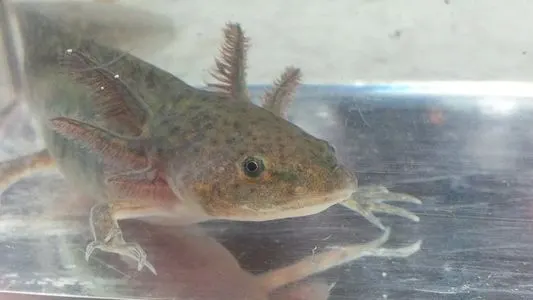
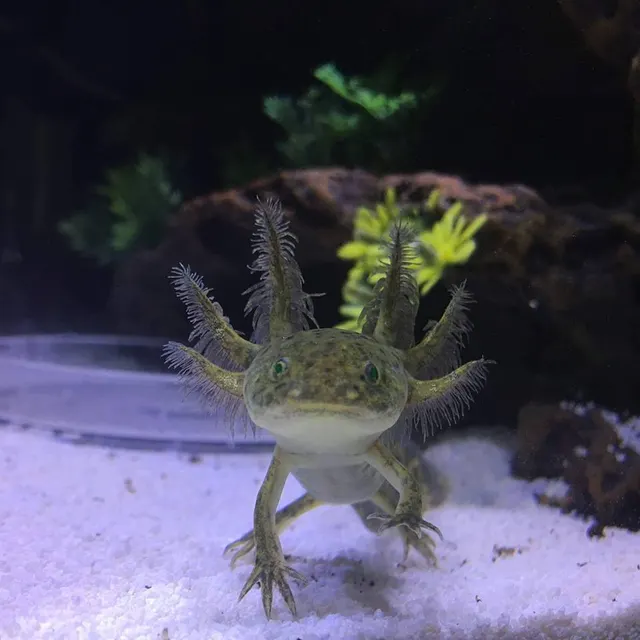
Compare it with a dark wild type. The wild type has a gold ring around the pupil and shiny specks on the body; the melanoid has neither. Some pale grey melanoids are sold as “lavender”, so see our lavender axolotl guide before paying extra for the name.
Care and buying notes
Colour does not change care: every morph needs the same cool, clean, cycled water described in our Axolotl Care Sheet. On a black animal, look closely for pale patches, fuzzy growths or curled gills during health checks, because redness is harder to see than on a pale morph.
Frequently Asked Questions
Are black axolotls real?
Yes. The melanoid morph is a naturally inherited black or dark grey axolotl. It is not dyed or modified.
How can I tell a melanoid from a wild type?
Look for the gold ring around the pupil and shiny flecks on the body. A wild type has both. A melanoid has neither.
Are melanoid axolotls rare?
No. Melanoid is one of the standard morphs and is widely available from breeders.