Leucistic Axolotl: Colour, Genetics and Care
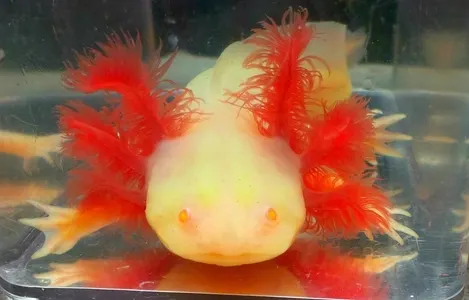
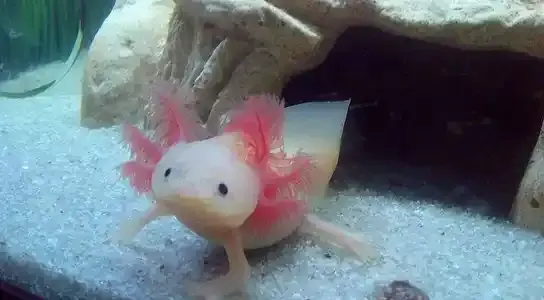
The leucistic, or “lucy”, is the pink-and-white axolotl most people picture: a pale body, black eyes and frilly red gills. It is the best-known pet morph and one of the easiest to recognise.
Quick answer
A leucistic axolotl is white to pale pink with dark eyes and pink-red gills. It is not an albino. Leucism is caused by a recessive gene that disrupts how pigment cells spread and develop across the skin, while the eyes keep their normal dark colour.
- White or pale pink body, dark eyes
- Caused by one recessive gene (two copies needed)
- May develop dark freckles on the head and back
- Two leucistic parents give all leucistic babies
What a leucistic axolotl looks like
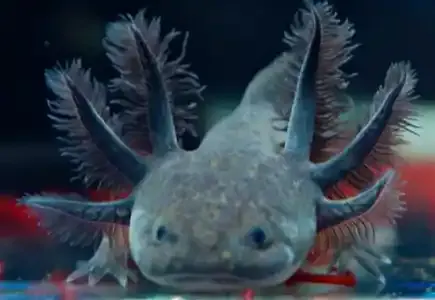
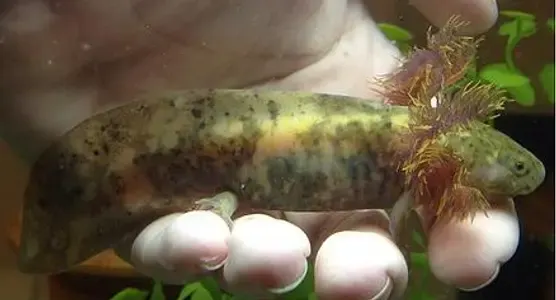
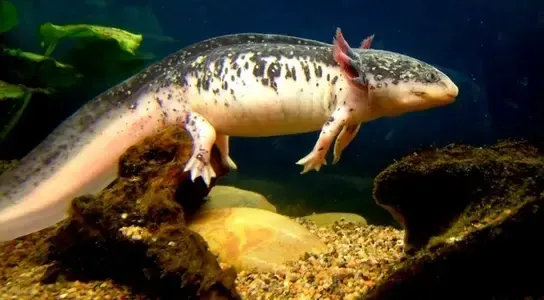
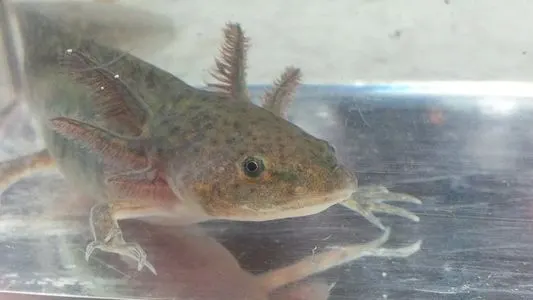
The skin is translucent white with a pink tint from the blood beneath it. The gill filaments are bright pink to deep red. The eyes are black or very dark blue, sometimes with a faint shiny ring. Many leucistics develop grey or black freckles on the face, head and along the back as they grow; keepers call a heavily freckled animal a “dirty lucy” or speckled leucistic. Freckling tends to increase with age and in darker surroundings.
Leucistic genetics
Pigment cells start life in a strip of tissue along the embryo’s back and normally travel outwards to cover the body. In a leucistic axolotl a signal those cells depend on (endothelin-3) is reduced, so they do not migrate and develop normally and most of the skin stays unpigmented. The pigment at the back of the eye forms from different tissue, the retina, which is why the eyes stay dark. The gene is recessive: an axolotl needs two copies to be leucistic. Leucistic to leucistic gives all leucistic babies, and with two carriers each baby has about a one in four chance. You can test pairings in our Morph Genetics Calculator.
How to tell a leucistic from similar axolotls
A white albino looks similar but has pink, red or clear eyes and never develops dark freckles. An axolotl sold as piebald usually has dark patches that run down the sides of the body, where a freckled leucistic tends to keep its spots to the head and the top of the back.
Care and buying notes
Colour does not change care: every morph needs the same cool, clean, cycled water described in our Axolotl Care Sheet. Pale skin shows redness, scratches and stress quickly, which makes health checks easy. Leucistics are widely available from breeders in Canada and the United States.
Frequently Asked Questions
Is a leucistic axolotl an albino?
No. A leucistic has dark eyes and can develop dark freckles. An albino lacks dark pigment altogether and has pink, red or clear eyes.
Why is my leucistic axolotl getting spots?
Freckles on the head and back are normal for many leucistics and usually increase with age. They are pigment, not illness. Fuzzy white tufts or red sores are different and need attention.
Are leucistic axolotls rare?
No. Leucistic is one of the most common pet morphs.