Wild Axolotls Are Running Out of Time: Where Lake Xochimilco Stands Today
Here’s a fact that surprises a lot of people who’ve only ever met a captive-bred axolotl: in the wild, axolotls are Critically Endangered — one step from Extinct in the Wild on the IUCN Red List. The pet trade population is enormous and genetically healthy. The wild population is neither.
A Species Named After Its Only Home
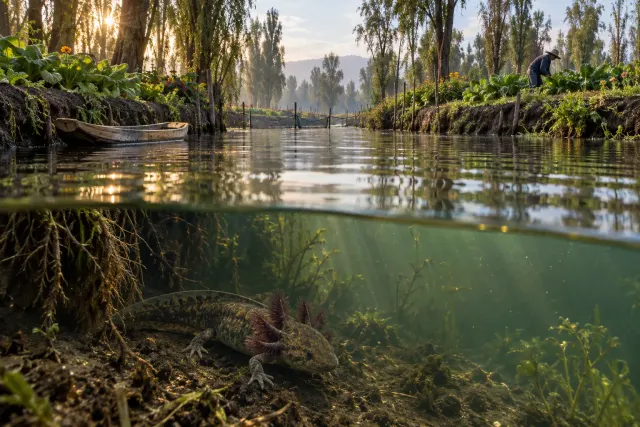
Axolotls (Ambystoma mexicanum) are native to exactly one place on Earth: the remaining canals and wetlands of Lake Xochimilco, on the southern edge of Mexico City. They once also lived in the neighbouring Lake Chalco, but that lake was drained decades ago as the city expanded. Xochimilco — a UNESCO World Heritage Site, famous for its network of canals and chinampas (human-made floating agricultural islands dating back to the Aztecs) — is what’s left.
Why Xochimilco Is in Trouble
A handful of pressures have compounded over the past few decades:
- Water pollution from urban runoff and untreated wastewater entering the canal system
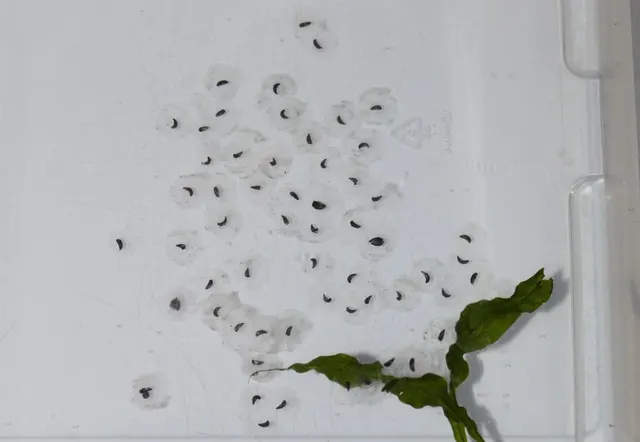
- Invasive fish species — tilapia and carp, introduced decades ago to support local fishing, prey on axolotl eggs and larvae and compete with adults for food
- Urban expansion steadily reducing wetland habitat around the lake
- Water extraction for Mexico City’s water supply, lowering canal levels
A long-running survey led by biologists at Mexico’s National Autonomous University (UNAM) tracked a staggering decline in wild population density — from roughly 6,000 axolotls per square kilometre of habitat in 1998 to just a few dozen per square kilometre by the mid-2010s. That’s a decline of well over 99% in under two decades.
What “Critically Endangered” Actually Means
It’s the second-most-severe category on the IUCN Red List, one step above “Extinct in the Wild.” It doesn’t mean axolotls are rare overall — thanks to the pet trade and research colonies, there are almost certainly more axolotls in captivity worldwide than have ever existed in the wild at once. It means the wild, genetically diverse population in its native habitat is at serious, immediate risk of disappearing entirely.
What’s Being Done
Conservation efforts in Xochimilco have focused on a few practical approaches:
- Refugios (biological shelters) — sections of canal fenced off from invasive fish, restored with native vegetation, and monitored — giving wild axolotls a safer space to breed
- Water quality improvements, including treatment infrastructure aimed at reducing pollution entering the canal system
- Chinampa restoration, since the traditional, chemical-free farming methods used on chinampas naturally filter water and support the broader wetland ecosystem axolotls depend on
- Ongoing population monitoring, so conservationists can track whether these interventions are actually working
How the Pet Trade Fits In
It’s worth being clear about this: virtually every axolotl sold as a pet today, including through registered breeders, descends from a captive research and hobbyist population that has been maintained outside Mexico for well over a century, not from wild-caught animals. Buying a captive-bred axolotl doesn’t directly help wild Xochimilco populations, but it also doesn’t harm them — and a thriving, well-documented captive population is a genuine safety net if the wild population continues to decline.
Keep Reading
- Chinampas Restoration: The Ancient Farming Technique Helping Save Wild Axolotls — the habitat work that is actually making a difference
- Captive Breeding vs. Wild Reintroduction — why the millions of pet axolotls can’t simply be released
- General Axolotl Information — taxonomy, native range, and conservation status in one place
Frequently Asked Questions
Are axolotls extinct in the wild?
Not yet, but they’re Critically Endangered, surviving only in the canals of Lake Xochimilco near Mexico City, in numbers that have dropped sharply over the past two decades.
Is my pet axolotl from the wild?
Almost certainly not. Pet and lab axolotls come from a long-established captive-bred lineage, separate from the wild Xochimilco population.
What's the biggest threat to wild axolotls?
A combination of water pollution, invasive fish (tilapia and carp) preying on eggs and juveniles, and habitat loss from Mexico City’s urban expansion.
Can I help wild axolotl conservation as a hobbyist?
Supporting reputable conservation organisations working in Xochimilco is the most direct way. Responsible ownership — buying captive-bred animals and never releasing pets into local waterways — also matters, since released non-native axolotls or their diseases can harm local ecosystems.
Quick answer
Wild axolotls are Critically Endangered, one step from Extinct in the Wild. They survive only in the canals of Lake Xochimilco near Mexico City, where population density fell by more than 99% between 1998 and the mid-2010s. The species itself is safe because of huge captive populations; the wild population is not.
- IUCN status: Critically Endangered
- Native range: Lake Xochimilco (Lake Chalco, its other home, was drained decades ago)
- Density fell from roughly 6,000 per km² (1998) to a few dozen per km² (2014)
- Main threats: pollution, invasive tilapia and carp, urban expansion, water extraction