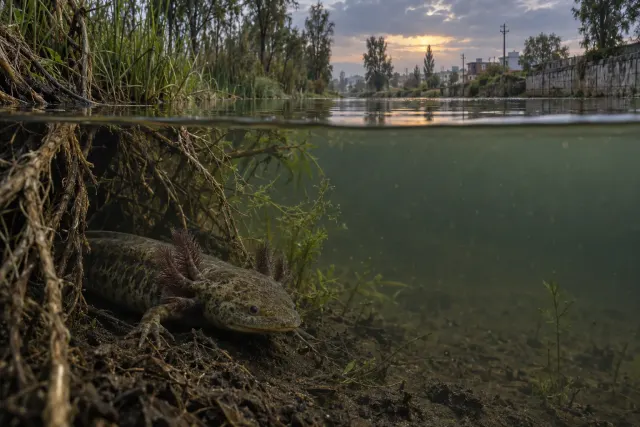
Chinampas Restoration: The Ancient Farming Technique Helping Save Wild Axolotls
Some of the most promising axolotl conservation work isn’t happening in a lab — it’s happening on centuries-old farmland. Chinampas, the human-made floating agricultural islands built by the Aztecs in Lake Xochimilco, turn out to be closely tied to whether wild axolotls have a future at all.
Quick answer
Chinampas are the human-made farming islands of Lake Xochimilco, built by the Aztecs. Restoring traditional, chemical-free chinampa farming naturally filters the canal water axolotls live in, and restored plots are being turned into fenced refugios that keep invasive fish out — one of the most practical conservation tools in use today.
- Chinampas date back to the Aztec period and are still farmed
- Traditional farming uses no synthetic pesticides or fertilisers
- Refugios: canal sections fenced against tilapia and carp, replanted and monitored
- Xochimilco is a UNESCO World Heritage Site
What a Chinampa Actually Is
A chinampa is a narrow, rectangular plot built up from layers of lake mud, decaying vegetation, and stakes driven into the lakebed — effectively a human-made island anchored by the roots of willow trees planted along its edges. Farmers have grown vegetables and flowers on chinampas in the Xochimilco canal system for hundreds of years, and the technique is remarkably productive without relying on synthetic fertilisers or pesticides.
Why This Matters for Axolotls
Traditionally farmed chinampas function as natural water filters — the aquatic plants and soil structure trap sediment and absorb excess nutrients before they build up in the canal water. As chinampa farming has declined in favour of other land uses, water quality in the surrounding canals has suffered, which directly affects axolotl habitat. Restoring traditional, chemical-free chinampa farming isn’t just about preserving a cultural practice — it’s a practical way to improve the water quality axolotls depend on.
From Farms to Refuges
Conservation groups working in Xochimilco, including researchers from Mexico’s National Autonomous University (UNAM), have gone a step further by establishing refugios (refuges) on and around restored chinampas — sections of canal fenced off from invasive fish species, replanted with native aquatic vegetation, and monitored for water quality. These refuges give wild axolotls a comparatively safe, cleaner environment to breed in, insulated from some of the pressures affecting the wider canal system.
A Model Other Regions Are Watching
The chinampa-restoration approach is notable because it doesn’t require choosing between economic activity and conservation — restored chinampas can still produce crops for local markets while also supporting the wetland ecosystem. That combination has drawn interest from conservationists working on similar urban-wetland problems elsewhere, since a self-sustaining local economy tends to make conservation efforts far more durable than funding-dependent projects alone.
Frequently Asked Questions
Are chinampas still used for farming today?
Yes, though on a smaller scale than in past centuries. Restoration projects are actively working to bring more chinampas back into traditional, chemical-free cultivation.
How does farming help axolotls at all?
Traditional chinampa farming naturally filters canal water and avoids the synthetic chemicals that would otherwise degrade axolotl habitat — so restoring the farming method restores water quality as a side effect.
Where can I learn more about the overall conservation picture?
See Wild Axolotls Are Running Out of Time for the full context on population decline and what’s being done.