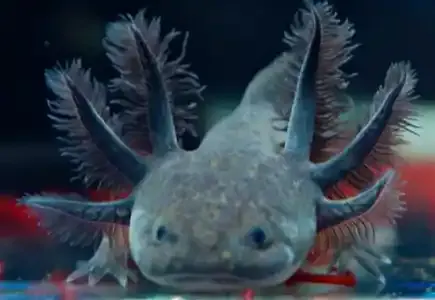
GFP Axolotl: Why Some Axolotls Glow Green
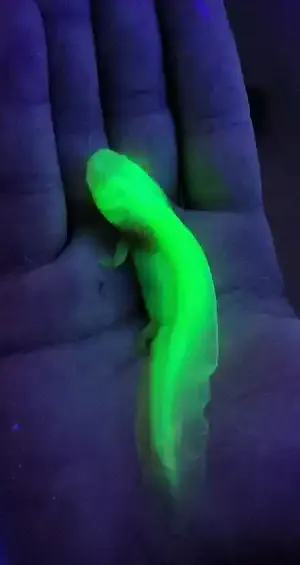
Some axolotls glow bright green under blue or ultraviolet light. They carry GFP, green fluorescent protein, a trait first added to axolotls in research laboratories and since bred into the pet hobby.
Quick answer
A GFP axolotl carries a gene for green fluorescent protein, originally from a jellyfish. In normal light it looks like any other morph. Under blue or UV light its body glows green. The trait is inherited, and one copy from one parent is enough.
- Glows green under blue or UV light only
- Can be combined with any colour morph
- One copy is enough to glow
- Avoid UV; view briefly under dim blue light
What a GFP axolotl looks like
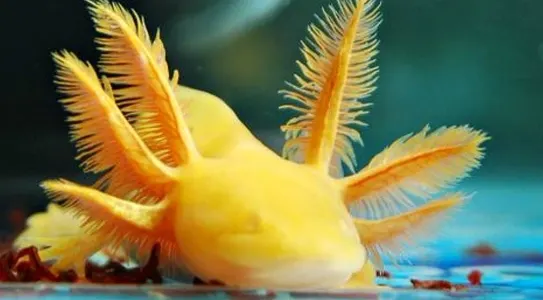
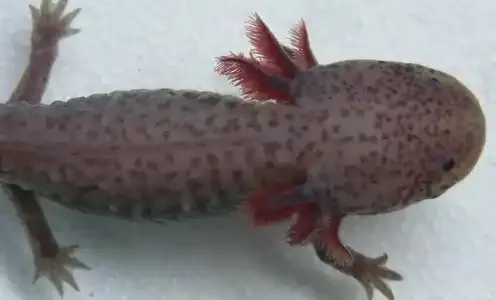
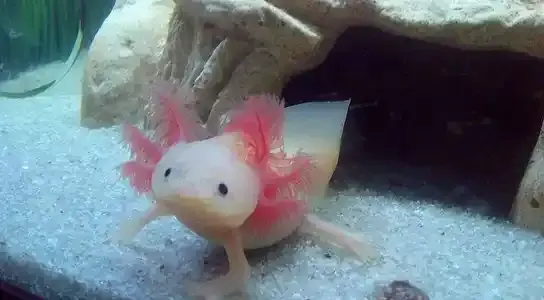
In daylight a GFP axolotl is simply its base morph: a GFP leucistic looks pink and white, a GFP wild type looks olive. Pale animals may show a faint yellow-green tint, most noticeably in the eyes. Under blue light the whole animal lights up green. The glow is strongest in pale morphs and is partly masked by dark pigment in wild types and melanoids.
GFP genetics
GFP is not a pigment morph. It is an added gene, introduced by scientists so that they could follow individual cells during studies of regeneration. It behaves as a dominant trait: an axolotl with one copy glows, and a parent with one copy passes it to about half of its babies. It is inherited independently of colour, so any morph can be GFP. You can test pairings in our Morph Genetics Calculator.
How to tell a GFP from similar axolotls
You cannot reliably identify GFP in ordinary light. A GFP parent does not guarantee a GFP baby, so ask the breeder to show you the animal itself under blue light. A firefly axolotl is different: only part of its body glows, because it was assembled from two embryos.
Care and buying notes
The protein itself is not known to harm axolotls. The light is the issue. Axolotls have no eyelids and dislike bright light, and UV can damage skin and eyes. Avoid UV (blacklight) viewing altogether. If you want to see the glow, use a dim blue light briefly, in a tank where the axolotl can retreat into shade, and never use it as tank lighting. Otherwise, care follows our Axolotl Care Sheet.
Frequently Asked Questions
Do GFP axolotls glow in the dark?
No. They fluoresce, which means they glow only while blue or UV light is shining on them. In darkness they do not give off light.
Does GFP hurt the axolotl?
The protein is not known to cause harm. UV and bright light can, so avoid UV and keep any blue-light viewing brief and dim.
Will a GFP axolotl have GFP babies?
A parent with one copy passes it to about half of its offspring. A parent with two copies passes it to all of them.