5 Things People Get Wrong About Axolotls
Axolotls have gone from obscure to internet-famous fast, and popularity always brings along a few myths. Here are the five we hear most often — and the actual, more interesting reality behind each one.
Quick answer
The five most common axolotl myths: they are fish (no — salamanders), they are extinct (Critically Endangered in the wild, thriving in captivity), they eventually walk on land (healthy axolotls stay aquatic for life), any big tank works (temperature matters as much as size), and regeneration is instant (it takes weeks and real energy).
- Amphibian, genus Ambystoma — not a fish, not a lizard
- Ideal water temperature: 16–18 °C (60–64 °F)
- Lifespan in good care: typically 10–15 years
- Adult size: usually 23–30 cm (9–12 in)
Myth 1: “Axolotls Are a Type of Fish”
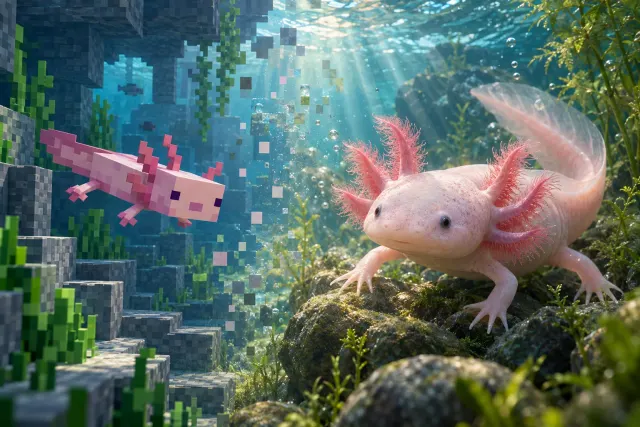
They’re not fish at all — they’re amphibians, specifically a type of salamander. Axolotls belong to the genus Ambystoma (mole salamanders) and breathe partly through external gills and partly through their skin. See What Are Axolotls? for the full biology.
Myth 2: “They’re Extinct in the Wild”
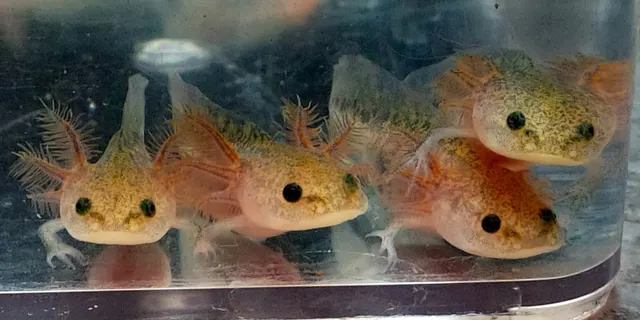
Not extinct, but close: axolotls are Critically Endangered in their one native habitat, Lake Xochimilco near Mexico City. That’s very different from extinct — and it’s a status specifically about the wild population, not the enormous, genetically stable captive population kept by breeders and hobbyists worldwide. For the full picture, see Wild Axolotls Are Running Out of Time.
Myth 3: “Adult Axolotls Eventually Grow Legs and Leave the Water”
This is where axolotls are genuinely unusual: unlike most salamanders, they reach full sexual maturity while still in their aquatic, gilled larval form — a trait called neoteny. Left alone, a healthy axolotl stays aquatic for its entire life and never naturally metamorphoses into a land-dwelling adult.
Myth 4: “Any Aquarium Setup Works, as Long as the Tank Is Big Enough”
Tank size matters, but water temperature is just as critical, and it’s the one most new owners get wrong. Axolotls are cool-water specialists that do best between 60–64°F (16–18°C); warm water stresses them and is one of the leading contributors to illness. Our Tank Size Calculator and Setting Up Your Axolotl Tank guide cover what actually matters.
Myth 5: “Regeneration Is Instant and Effortless”
Axolotls really can regrow limbs, but it’s not instant, and it’s not free. Rebuilding a limb takes weeks to months and draws heavily on the animal’s energy reserves — closer to a demanding recovery process than a superpower reset button. For how it actually works, see Why Axolotls Can Regrow Limbs.
Frequently Asked Questions
So what is an axolotl, if not a fish or a fully grown salamander?
It’s an amphibian — specifically a neotenic salamander that keeps its aquatic, larval body plan for life instead of transforming into a land-based adult.
Can axolotls survive out of water at all?
Briefly, yes, similar to a fish out of water — but they’re not built for it, and extended time out of water is dangerous for them.
Why do so many people think axolotls are extinct?
Likely because their Critically Endangered status in the wild gets simplified in headlines and social posts — the nuance between “wild population at serious risk” and “the species is gone” often gets lost.