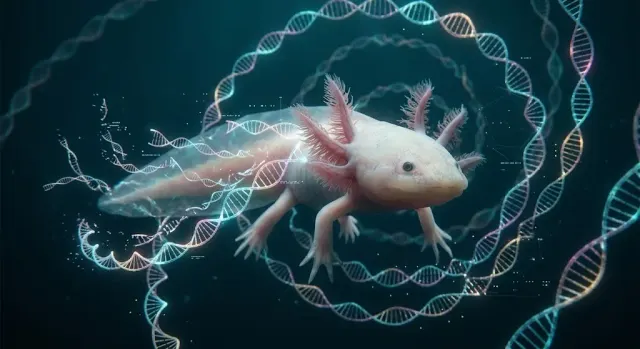
Why Axolotls Don't Reject Transplants
Transplant rejection is one of the toughest problems in human medicine — the immune system is very good at recognising foreign tissue and attacking it. Axolotls have a strikingly different relationship with this problem, and it’s a major reason they’ve been useful in transplant and regeneration research for decades.
Quick answer
Axolotls accept skin and even limb grafts from other axolotls with far less immune rejection than most vertebrates. This is not a weak immune system — they still fight infection — but a restrained response to their own species' tissue, which has made them valuable for transplant and regeneration research.
- Low rejection of same-species grafts
- Normal immune response to infection
- Grafting is a core research technique in regeneration studies
- Human transplant applications remain a long-term, open question
An Unusually Tolerant Immune System
Axolotls can accept skin grafts, and in experimental settings even limb grafts, from other axolotls with a remarkably low rate of immune rejection compared to most vertebrates. This isn’t the same as having a weak immune system — axolotls still fight off infections — it’s more that their immune response to transplanted tissue from their own species is unusually restrained.
Why This Matters for Regeneration Studies
This immune tolerance has made axolotls a practical tool for regeneration research specifically. Researchers can graft tissue between individual axolotls — moving a limb bud, a piece of skin, or other tissue from one animal to another — and reliably study how it integrates and develops, without the graft being rejected before the experiment produces useful results. That’s much harder to do reliably in most other lab animals.
The Connection to Human Transplant Research
Human organ and tissue transplants require lifelong immune-suppressing medication specifically to prevent rejection — medication that carries its own health risks. Understanding why axolotls tolerate transplanted tissue so well is of real interest to researchers working on transplant immunology, even though translating that understanding into human treatment is a long-term, still largely open research question rather than something with a clear timeline.
Part of a Bigger Picture
Immune tolerance sits alongside blastema formation (see Why Axolotls Can Regrow Limbs) and cancer resistance as one of several interconnected traits that make axolotls unusually well-suited to regeneration. None of these traits fully explain axolotl regeneration on their own — researchers increasingly think it’s the combination of all of them together that makes the whole process work as well as it does.
Frequently Asked Questions
Does this mean axolotls have weak immune systems?
No — they still mount effective immune responses to infections. The tolerance specifically applies to transplanted tissue from other axolotls.
Could this research help human transplant patients?
It’s a genuine area of scientific interest, but any practical application for human medicine remains a long-term, open research question rather than something close to clinical use.