Axolotl Illness and Treatment
The first thing to do when you suspect your axolotl may be ill is to isolate it. This will reduce stress and prevent the spread of any disease. Keep your sick axolotl in a tub, bucket, or hospital tank. If you don’t have a filter in the quarantine tank, you’ll need to change the water daily. Below are brief descriptions of common illness types, followed by a table of symptoms and treatments.
Although axolotls are hardy animals, poor living conditions over a period of time will lead to disease and other illnesses. Poor water conditions and stress are the most common causes of illness. Some problems can be resolved with a simple water change, a salt bath, a tea bath, or Melafix, etc. Others may need medical attention from a specialised vet, which can be expensive.
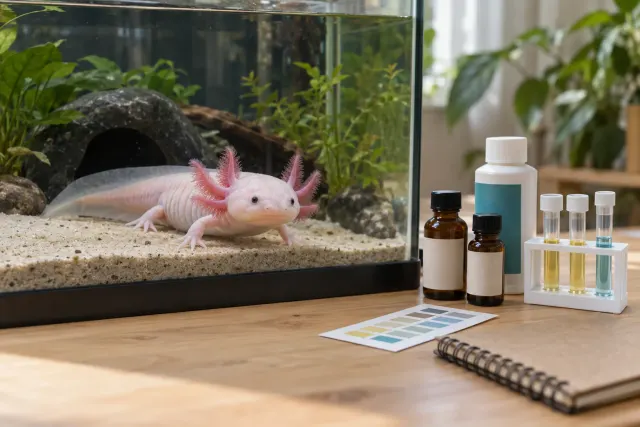
Test Your Water
Ideal conditions are:
- Ammonia and nitrite = 0
- Nitrate < 40ppm
- pH = 7–8
The most common sign of stress is a tail that curls like a hook, and gills that curve forward like the letter C.
Nutrition
Like all living creatures, including ourselves, nutrition is key. You should try to feed your axolotl nothing but the best food available. It’s always a good idea to vary its diet so it gets a good variety of vitamins and minerals. The ideal food source for axolotls — said to meet their needs perfectly — is live earthworms: 62.2% protein, 17.7% fat, 1.72% calcium, and 0.90% phosphorous. Nutritional problems can lead to issues that are generally not noticeable until it’s too late, including liver failure, a weakened immune system, kidney failure, and fluid disorders.
Parasites
Parasites, in general, can be very tricky to get rid of, especially internal ones. Most parasites will require medication from a vet. They can come from a number of sources, but most commonly from introducing non-native plants or animals. Symptoms can include vomiting, discolouration, and loss of appetite.
Fungal Infections
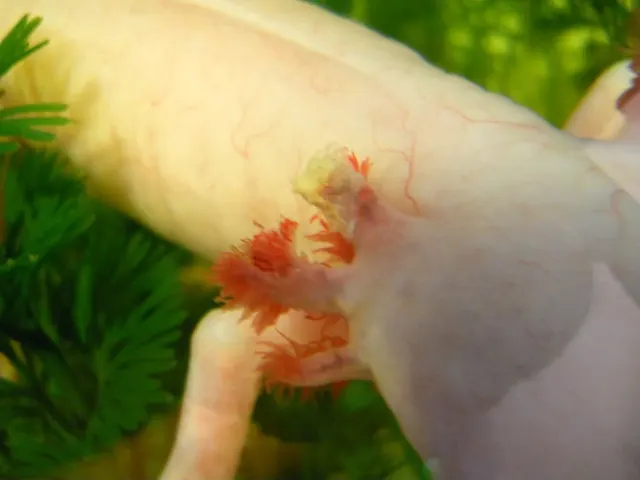
Fungal infections can happen almost anywhere, from the gills to the legs and even the eyes. They usually look like a cotton-like fluff or ball. The best at-home remedy for fungal infections is salt baths. Fungal infections are one of the most common illnesses in axolotls, most commonly caused by injuries, poor water quality, and prolonged periods of high temperature.
Bacterial Infections
Bacterial infections are caused by bacteria and can sometimes be carried through the bloodstream, spreading very quickly throughout the body. They’re very contagious, and can be caused by poor water quality, infected food, and introducing unsterilised plants.
Symptoms & Treatment
| Symptoms | Probable cause | Potential treatments |
|---|---|---|
| White "fluff" on feet or gills | Fungus; poor water quality/conditions; minor injury | First, try a tea bath using Indian almond leaves, Cattappa extract, 20% Hotfreter's solution, or untreated water baths. For more severe or continuing cases, try a salt bath, 40% Hotreter's solution, methylene blue, Furazolidone/Nitrofura-G, or Mercurochrome. Generally, half the stated dose is recommended for axolotls. |
| Gills are shrinking; scratching at gills | Poor water quality; recent water change | Test the water quality using your water testing kit. Follow the recommended procedures to fix whatever readings are off. If the problem occurred after a water change, it's probably because the water wasn't treated before being added to the tank — place the necessary chemicals directly into the tank if possible. |
| General pink/red flush all over; fidgety behaviour | Poor water quality | Perform a 50% water change, test your water using your testing kit, and treat the water accordingly. |
| Floating tail | Constipation | Feed normally and do a water change (cleaning tanks seems to induce a bowel movement). If no bowel movement occurs within a few days, consider fridging overnight. |
| Arched back | Digestive discomfort; constipation | Feed soft foods — no pellets or insects. If persistent, fridge the axolotl overnight. If the problem isn't fixed within a few days, seek assistance from a vet. |
| Mouth hanging open | Obstruction in the mouth | Inspect the mouth for obvious obstructions. |
| Mouth hanging open; swollen neck; swelling of the limbs; bloated or swollen belly | "Bloat" — fluid retention | The main cause is usually an infection or failure of the kidney or liver. Seek vet assistance immediately. |
| Flaking skin | Poor water quality; bacteria; parasites | Test your water quality using your testing kit and treat it accordingly. Tea baths and slime coat medication will help soothe irritated skin. If the problem doesn't start to improve within a couple of days, seek vet assistance/advice. |
| Red patches on the skin; swollen red cloaca; red belly; red pinpoint marks on the skin | Bacterial infection; septicaemia | Perform a water change and try using axolotl safe medication and treatment for the bacteria. If there's no improvement within a couple of days, seek a vet. |
| Lump on the head | Abscess; tumour | Seek vet assistance as soon as possible — surgery is likely needed. |
| A large lump or "balloon" at the cloaca | Prolapse | Seek a vet — surgery is needed. |