Salt Baths for Axolotls
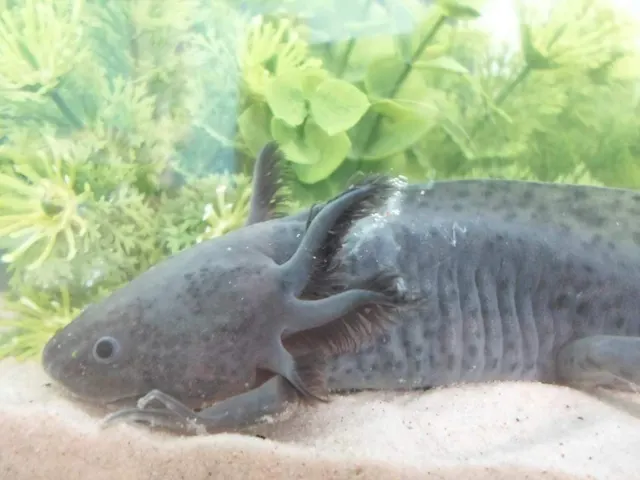
Salt baths are recommended and work particularly well alongside fridging. For this to go smoothly, the salt solution needs to be the same temperature as the fridging water — don’t fridge your axolotl at 6°C and then move it into a 20°C salt bath. Salt baths work best against fungal species that produce fuzzy or grey clumps on your axolotl.
Preparing Your Solution
Salt concentrations range from 4–6 grams per litre for longer exposure (up to 72 hours) to 10–25 grams per litre for a brief, high-concentration bath (10–30 minutes). The salt used must be non-iodised — table salt has an added anti-caking compound and should never be used. Preferred options are sea salt or freshwater aquarium salt, available in our marketplace. Once a salt bath solution has been used, discard it and prepare a fresh batch for next time.
Treating Fungal Eggs
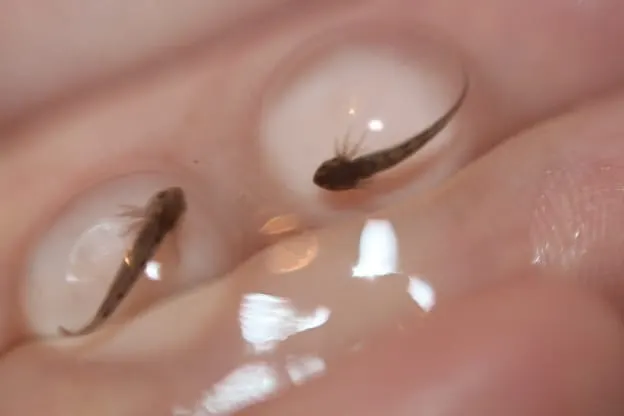
At certain times of year, fungal spore counts run high, and fungal growth on amphibian eggs becomes a real problem — appearing as filamentous, fuzzy white or grey growth on and inside the egg jelly. Treated early, before the fungus reaches the embryo, the spawn can usually be saved.
- Prepare a clean container. 6 grams of salt per litre of dechlorinated water is sufficient for axolotl eggs (roughly a quarter-ounce per quart).
- Using forceps, transfer the affected eggs into the salt solution. Once they’re all in, gently stir for 10 minutes.
- Transfer the eggs back into regular water. This can be repeated for two or three consecutive days.
- Removing the egg jelly after treatment also helps, if you have a microscope and the right instruments on hand.
Treating Skin Fungal Infections
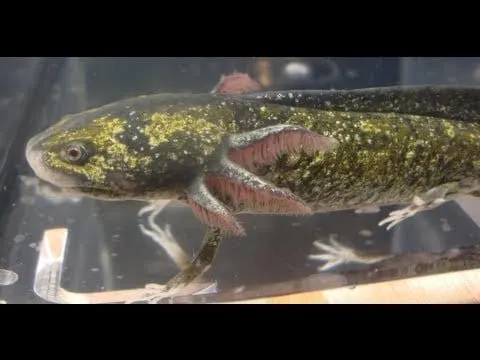
Skin fungus can take hold in a contaminated wound, but usually shows up as a result of poor conditions in a stressed, immune-suppressed animal. Affected skin develops tufts of grey or white filaments. Recommended salt concentrations vary fairly widely for this use — keep to the lowest concentration that’s still effective, and treat as gently as possible, since this is often a sign of an axolotl already dealing with other health issues. Alongside treatment, disinfect and remake the habitat, and keep the axolotl in a separate quarantine setup until treatment is complete.
- In a clean bowl, mix a salt solution of about 6g per litre.
- Place the axolotl in the bath for no more than 30 minutes.
- Wearing examination gloves, gently remove the fungus.
- Return your axolotl to its regular tank water.
This can be repeated on consecutive days, or every other day, for more stubborn infections.
Source: caudata.org — Salt Baths